
|
||||||||||||||||||||||||||||||||||||||||||||||||||||||||||||||||||||||||||||||||||||||||||||||||||||||

 In
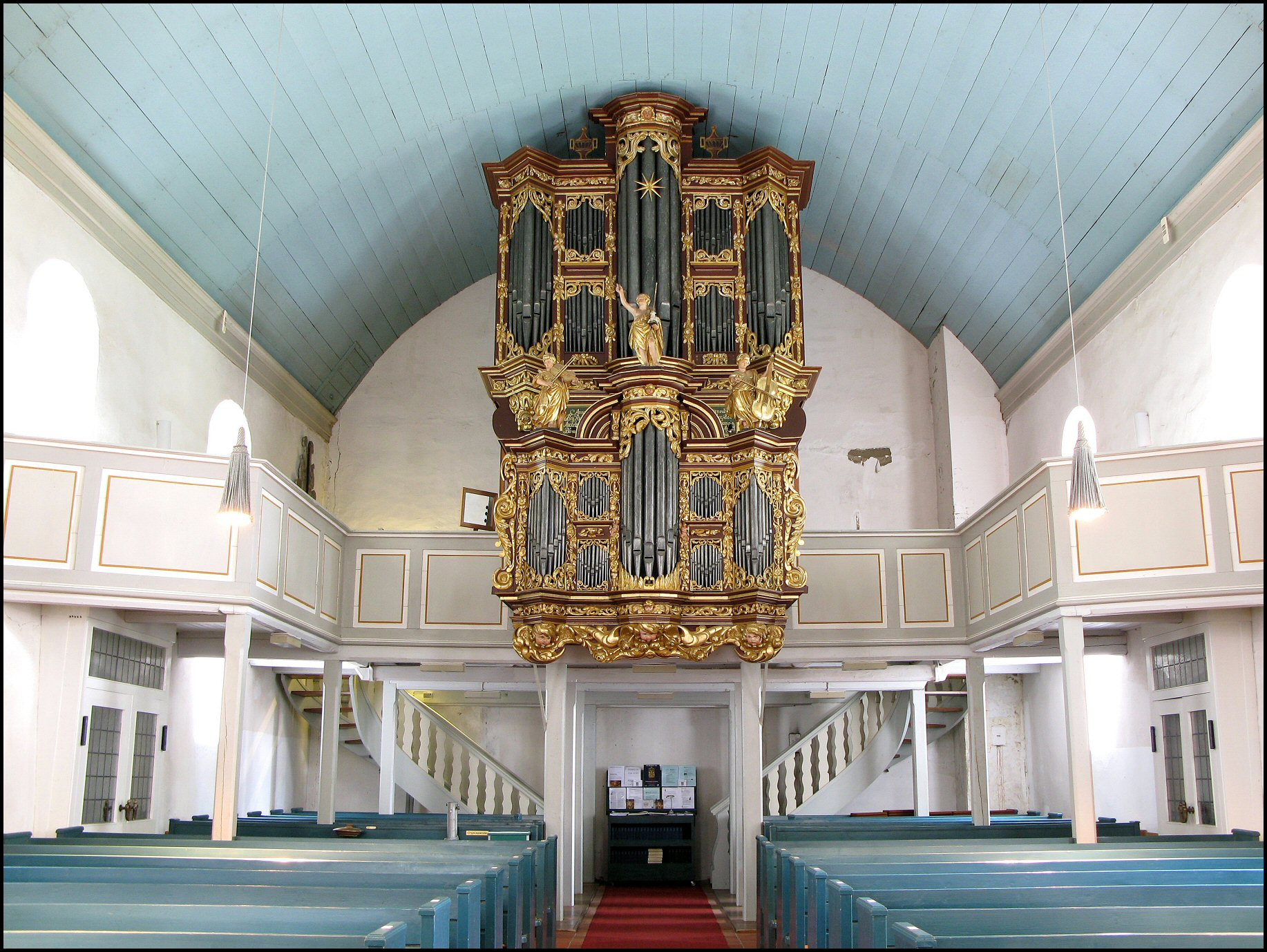
1678, Schnitger set out as an independent organ builder, and his first extant
instrument (1680) was the organ for the church of the Benedictine monastery St.
Johannis in Hamburg, Germany. During the French occupation (1806-1814) this
church was confiscated by Napoleon and served as a military depot. The organ was
put into storage in 1813. Meanwhile, the church of St. Petri and St. Pauli in
Cappel, a village northwest of Hamburg, was destroyed by fire (1810) due to
negligence of the organist. The rebuilding of the church exhausted the financial
means of the congregation and did not allow for the acquisition of a new organ.
An opportunity to buy the organ of St. Johannis/Hamburg for 600 Reichstaler in
Louisdor, made possible the installation of this instrument in Cappel in 1816.
The remote location of Cappel and the continuing lack of finances allowed this
organ to fall into oblivion and to escape the inappropriate and harmful
restorations typical of the 19th century. The fact that Cappel was accessible
only by a dirt road during World War I also prevented the confiscation of its
front pipes for the war effort. Of all Schnitger's instruments, the organ in
Cappel is the only one to retain the original pipes in the front of the organ
case.
In
1678, Schnitger set out as an independent organ builder, and his first extant
instrument (1680) was the organ for the church of the Benedictine monastery St.
Johannis in Hamburg, Germany. During the French occupation (1806-1814) this
church was confiscated by Napoleon and served as a military depot. The organ was
put into storage in 1813. Meanwhile, the church of St. Petri and St. Pauli in
Cappel, a village northwest of Hamburg, was destroyed by fire (1810) due to
negligence of the organist. The rebuilding of the church exhausted the financial
means of the congregation and did not allow for the acquisition of a new organ.
An opportunity to buy the organ of St. Johannis/Hamburg for 600 Reichstaler in
Louisdor, made possible the installation of this instrument in Cappel in 1816.
The remote location of Cappel and the continuing lack of finances allowed this
organ to fall into oblivion and to escape the inappropriate and harmful
restorations typical of the 19th century. The fact that Cappel was accessible
only by a dirt road during World War I also prevented the confiscation of its
front pipes for the war effort. Of all Schnitger's instruments, the organ in
Cappel is the only one to retain the original pipes in the front of the organ
case.


